

Opening a bank account in Japan as a foreign intern is one of those tasks that sounds simple until you’re standing at the counter with a number ticket, a folder of documents, and the sudden realization that you’re missing one thing. That one thing, more often than not, is a hanko.
For most foreigners, the hanko requirement at Japanese banks comes as a surprise. You’ve been signing documents your entire life. A signature feels natural, official, and universally accepted. But in Japan, the stamp often carries more institutional weight than the signature — and nowhere is this more visible than at the bank.
Hanko for interns in Japan is a topic that comes up fast, usually within the first week of arrival. Your company is depositing your stipend. You need an account. The bank wants a seal. This guide walks you through exactly why that happens, which documents come up during the banking process, what type of hanko to get, and how to order one in English before the paperwork pressure hits.
If you handle this early, the rest of your Japan paperwork experience gets significantly smoother.
Why This Segment Is Asked for a Seal

Japan’s banking system has deep roots in physical verification. For decades, the hanko served as the primary way individuals confirmed identity and authorized transactions. Your stamp on a document meant you had reviewed it, consented to it, and were accountable for it. Banks built their internal processes around this system, and many of those processes remain intact today.
For foreign interns specifically, the banking ask often feels disproportionate. You’re not applying for a mortgage. You’re opening a basic account to receive a monthly stipend or cover living expenses. But the bank’s internal forms don’t distinguish between a three-month intern and a ten-year resident. The stamp field is there, and it needs to be filled.
Here’s a scenario that plays out regularly: An intern arrives in Osaka for a four-month program at a manufacturing firm. The company’s payroll department processes transfers through Japan Post Bank accounts. On day three, the intern visits the nearest Yucho branch with their residence card, passport, and phone. The staff member slides over a form. There’s a stamp box in the corner. The intern doesn’t have a hanko. The application stalls.
This isn’t a rare edge case. It’s a standard friction point, and it’s one of the most avoidable delays in the entire Japan onboarding process.
The broader context matters too. Even at banks that have updated their procedures to accept signatures from foreign nationals in some cases, the policy varies by branch, by account type, and by the individual staff member handling your application. Having a hanko means you never have to negotiate that ambiguity. You simply stamp and move forward.
Common Documents and Timelines
Banking paperwork for interns tends to arrive in a tight cluster during the first two weeks. Understanding what’s coming helps you avoid multiple trips to the same branch.
Documents you’re likely to encounter during bank account setup:
- Account opening application form — The core document. Most banks include a designated hanko field. Japan Post Bank (Yucho), Sumitomo Mitsui, and many regional banks commonly request a stamp here.
- Specimen stamp registration card — Some banks ask you to register your seal impression at the time of opening. This becomes the reference stamp for future transactions.
- Direct debit or automatic transfer authorization forms — If your company sets up automatic salary deposits, or if you’re signing up for utility autopay, these forms often include a stamp field.
- Online banking enrollment forms — Less common as a paper form, but some branches still process initial enrollment paperwork physically.
- Change of address or account update forms — If you move mid-internship and need to update your registered address with the bank, expect another stamp request.
Realistic timeline:
The pressure is highest in days three through ten. Your company’s payroll team often sets a deadline for submitting your bank details. Miss that window and your first stipend payment may be delayed or issued by alternative means, which creates its own administrative headache.
If you’re also setting up a share house or apartment during the same window — which most interns are — you’re managing housing contracts and bank paperwork simultaneously. Both require a hanko. Arriving with one already in hand removes an entire layer of stress from that period.
Recommended Hanko Type and Size
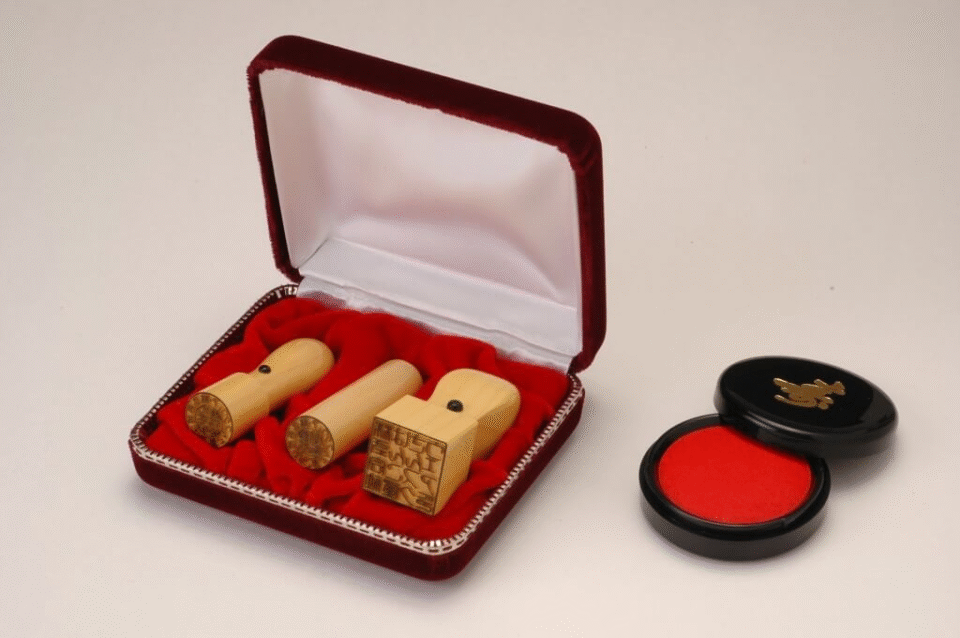
As an intern navigating bank account setup, you don’t need anything elaborate. The right hanko for this situation is practical, cleanly made, and correctly sized for standard document stamp boxes.
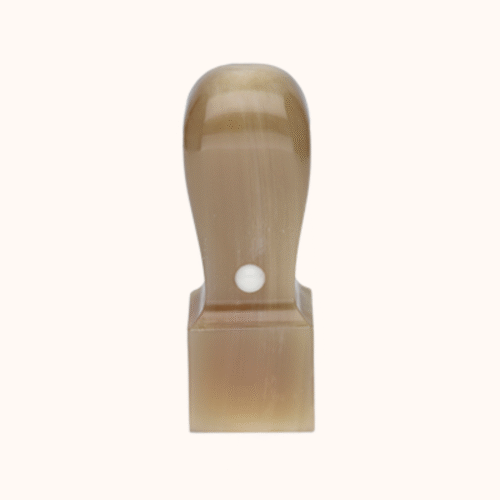
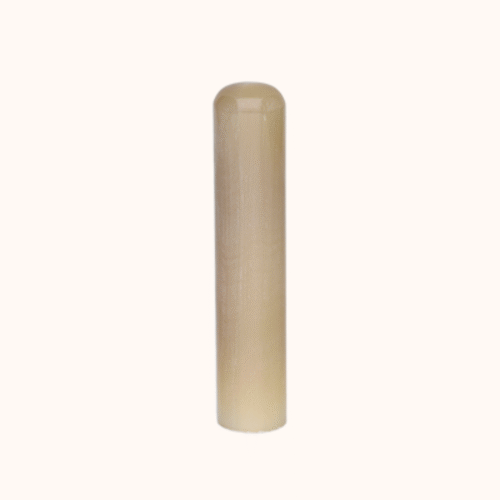
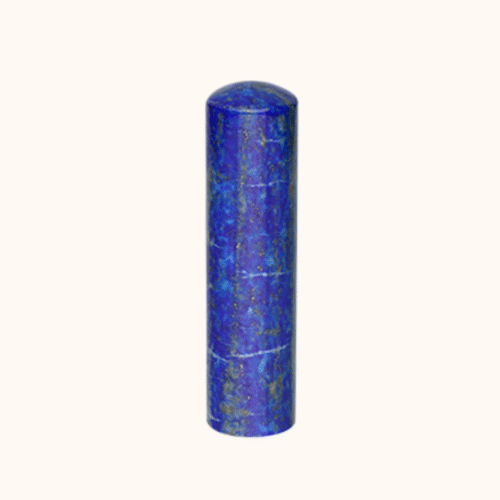
Type: Mitome-in (認め印)
This is the general-purpose personal seal. It does not require official registration at the city office (that’s a separate category called jitsu-in, used for high-stakes legal transactions like real estate purchases). For bank account opening and standard financial paperwork, a mitome-in is what you need. Some banks technically accept either type, but a mitome-in is sufficient and involves no extra administrative steps.
Size: 10.5mm or 12mm
These are the standard dimensions for a personal seal. Larger seals are associated with company or corporate use. Bringing an oversized hanko to a bank counter can occasionally prompt questions. Stick with 10.5mm or 12mm and the stamp will fit cleanly in every standard field you encounter.
Material: Resin or acrylic
For a short-to-medium stay, resin is practical and durable. It stamps evenly, holds its shape, and is the most accessible option. If you want something that feels more permanent — perhaps because you’re planning to stay longer or want a keepsake — harder materials like ebonite or wood are worth considering.
Name rendering:
This is where foreign interns most often feel uncertain. Your options are:
- Katakana — The phonetic script used for foreign names in Japan. This is the most widely accepted and least likely to cause hesitation at any institution. If your residence card shows your name in katakana, use that exact rendering.
- Romaji (Latin alphabet) — Accepted at some banks, particularly those with international customer experience. Not universally accepted, and can occasionally stall the process at traditional branches.
When in doubt, katakana is the reliable choice. If you’re unsure how your name is rendered, the team at HankoHub can confirm the correct katakana before your seal is engraved.
Common mistakes at this stage:
- Ordering a seal that’s too large for standard stamp boxes — anything above 15mm is likely oversized for personal use.
- Using a 100-yen convenience store stamp with a common Japanese surname — these are not your name and will not be accepted for formal bank documents.
- Choosing a heavily stylized or decorative font that’s difficult to read clearly — banks occasionally reject stamps that are illegible.
- Waiting until you’re already at the bank counter to realize you need one — by that point, you’re looking at a return visit after a multi-day wait for production and delivery.
Ordering Tips in English
The main practical barrier for foreign interns isn’t the concept of a hanko — most people grasp it quickly. The barrier is the ordering process itself. Walking into a Japanese stationery shop or hanko-ya and navigating name rendering, size selection, and material choices in Japanese is a real friction point, especially when you’ve just landed and have twelve other things to sort out.
If you’re still looking for the right role, ComfysCareer is a solid starting point for foreigner-friendly jobs in Japan.
For those who already have a placement and need to get bank-ready fast, HankoHub runs the full process in English. You order online, confirm your katakana name rendering before anything is carved, and receive a properly made personal seal ready for bank paperwork. The platform is built specifically for foreigners in Japan, so the questions you’d normally have to work through in a second language are handled upfront in English.
Practical ordering checklist:
- Check how your name appears on your residence card or visa documentation
- Confirm the katakana rendering with your hanko maker before ordering
- Select mitome-in type — not jitsu-in
- Choose 10.5mm or 12mm diameter
- Order at least 5–7 days before your first bank visit
- If ordering from outside Japan, account for international shipping time
- Pick up a small ink pad (shuniki) at the same time if one isn’t included — red ink is standard for personal seals
- Store your hanko in a protective case to avoid damage or ink transfer in your bag
One additional tip: once you’ve used your hanko at the bank and your stamp impression is on file, try to use the same hanko consistently for that account going forward. Banks compare your current stamp against the registered impression. Switching seals mid-account can trigger a verification process.
FAQ
Do all Japanese banks require a hanko to open an account? Not all, and policies have been shifting. Some banks, particularly those with strong international customer bases, have updated procedures to accept signatures from foreign nationals. However, many branches — including regional banks and Japan Post Bank locations — still request a hanko. Having one eliminates the uncertainty entirely.
What if the bank says signatures are fine but the form still has a stamp box? This happens. Staff discretion plays a role. Some branches will accept a signature in the stamp field; others will not. If you have a hanko, the question doesn’t arise.
Can I use any hanko, or does it need to match my official documents exactly? For a mitome-in used in standard banking, an exact match to your legal name isn’t always required — but your name in katakana, consistent with how it appears on your residence card, is the safest approach. Avoid using a generic surname stamp that has nothing to do with your name.
What’s a specimen stamp and do I need to register one? Some banks record your seal impression at account opening as a reference for future transactions. This is called a specimen stamp registration. It simply means they keep a copy of your stamp on file. You don’t need to do anything extra — just bring your hanko when you open the account.
Can I use the same hanko for my internship contract and housing paperwork too? Yes. A personal mitome-in is a general-purpose seal. The same one you use at the bank works across employment documents, housing contracts, and general administrative forms. You don’t need separate seals for each purpose.
What if I lose my hanko after registering it at the bank? Contact your bank immediately. Since the stamp impression is on file, a different seal won’t match and could flag transactions. You’ll need to go through a seal change procedure, which typically involves visiting the branch with your ID. It’s manageable, but worth keeping your hanko safe to avoid it.
Is a digital hanko an option for bank paperwork? For physical paper-based bank forms, no. Digital hanko are relevant for online contract platforms and electronic document workflows, which some companies use internally. Bank account opening is still largely a physical paper process at most Japanese institutions.
Next Steps

Bank account setup is one of the first real tests of Japan’s administrative culture, and having your hanko ready before you walk into the branch makes it significantly less stressful. Order your personal seal at HankoHub, confirm your name in katakana before anything is engraved, and arrive at the bank counter prepared to stamp, register, and move on with your internship.